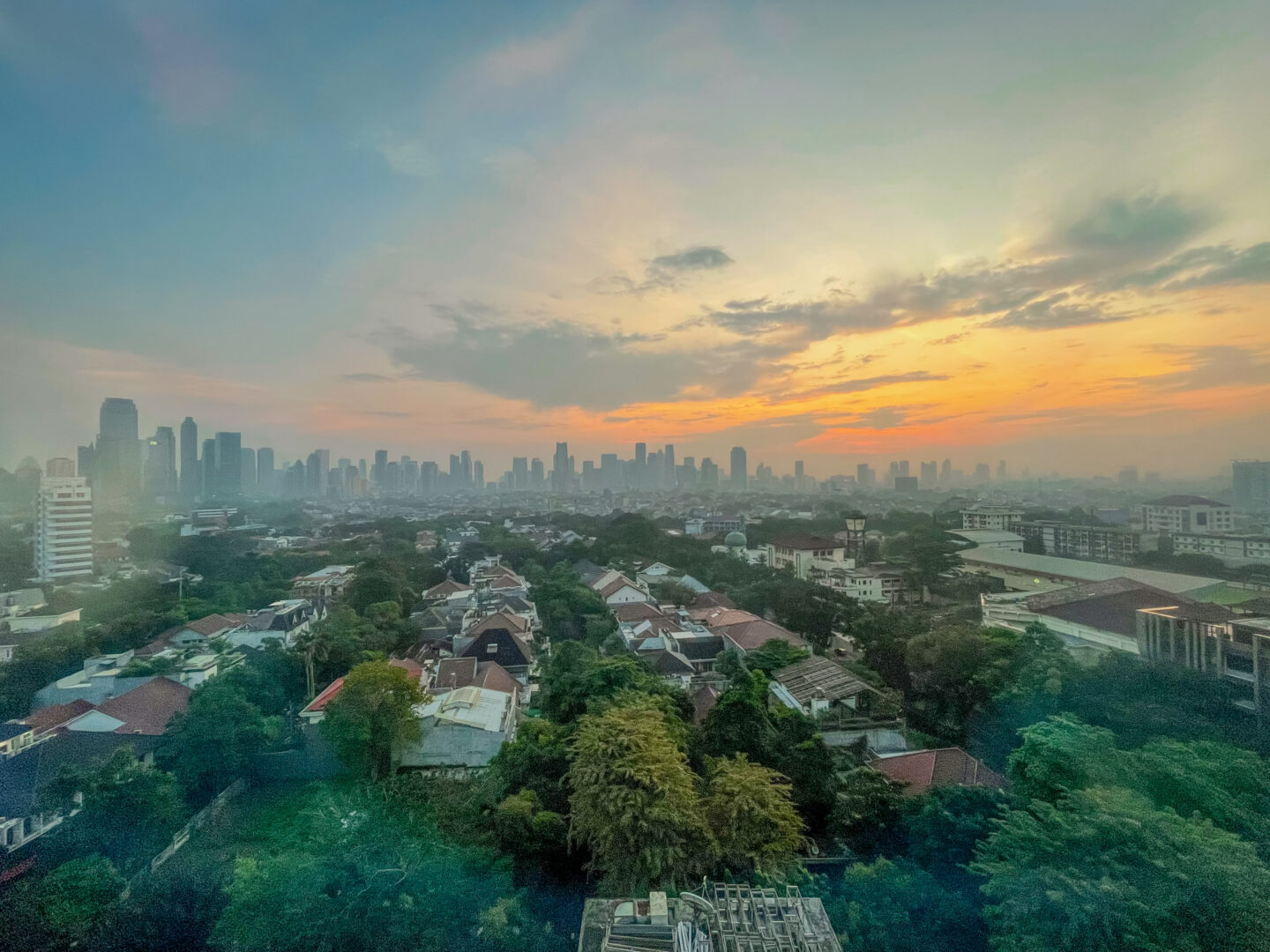
Jakarta’s Growth: Progress, Scale & Opportunity
A recent United Nations Population Division report found that Asia is now home to 9 of the world’s 10 most populous cities, with Indonesia’s Jakarta overtaking Tokyo in 2025 as the world’s largest city, with 42 million inhabitants.
Few planning professionals in Australia understand the context or makeup of most cities within the Report’s top 10, which include Dhaka in Bangladesh with 37 million residents, New Delhi in India with 30 million, and the Chinese cities of Shanghai and Guangzhou with 30 million and 28 million, respectively. The concentration of these Megacities in South-East and East Asia is the defining urban and demographic phenomena of this Century.
Many spatial planning commentators and much of the western media interpret these statistics negatively, suggesting that urban conglomerations of this scale can only deliver dysfunction, congestion, inequity, pollution and risk. However, this is not the reality on the ground in Jakarta. With more than 25 years of experience working across the ASEAN region and ongoing work in Indonesia since 2010, Hansen sees Jakarta’s ranking as an accolade to be celebrated and an incentive for continued investment in urban innovation and improvement.
Having contributed planning and design skills to projects widely across Jakarta and other Indonesian cities, including Surabaya, Bandung, Makassar, Semarang, Denpasar, Ubud, and the emerging National Capital of Nusantara (IKN), we have observed considerable progress in Indonesian urban management and planning.
Despite inherent climate and geographical threats across the archipelago, major investment in Jakarta’s infrastructure, including public housing, utilities, transit systems, open space networks and renewable energy, will ensure it caters for its vast population and future growth. What’s less widely known is that Jakarta is home to thousands of neighbourhoods known as Kelurahan, or urban villages, which host intact, lively communities, public facilities and cherished local places. This is the important context behind the number one world ranking and one that deserves deeper exploration.
Author: Craig Czarny, Hansen Partnership, Principal
Resources:
- ABC News Report: Read the full story
- The Report (World Urbanization Prospects 2025): Read here