Craig Czarny on Taipei’s Creative & Cultural Parks
What if urban renewal prioritised culture over commercial return?
A recent visit to the Taiwanese city of Taipei revealed a number of well-executed urban initiatives that I have yet to see implemented successfully across the ASEAN region.
Despite its relatively modest population of 2.5 million – far smaller than many of Southeast Asia’s megacities, Taipei maintains a distinctly moderate scale, is easy to navigate and highly walkable and has clearly defined neighbourhoods and vibrant street life. This vitality was on full display during the thriving Lunar New Year festivities.
Chief amongst features in inner Taipei are a series of aptly named ‘Creative and Cultural Parks’ (which I was recently alerted to in a LinkedIn post by Simon Blackwell of Hip V Hype). These sites are well worth exploring and represent both an inventive and well executed model of inner urban precinct planning and design comprising remnant (ie. heritage) building stock. We could well benefit from the application of these planning and design fundamentals in advancing some of our own (Australian cities) procrastinating urban renewal precincts!
These aren’t conventional private investment projects with housing, retail and/or mixed use redevelopment (ie malls) – rather they are distinguishable ‘public assets’ framed by open spaces and carefully curated ‘creative’ functions in a concentration that attracts creative industries, operators and makers and a special kind of micro-commerce with corresponding activity.
These (local) government owned and led spaces take the simple idea of the urban incubator (supporting SME and emerging industries) and place them at the very centre of a wider urban renewal model. In doing so the internal and external spaces that make up these ‘parks’ don’t feel like shopping malls for consumption/exchange alone, but places for local expression and production. Rising buildings around these parks demonstrate that they incentivise private investment in surrounding streets and neighbourhoods.Their beauty is in the coexistence of historic buildings, public spaces, emerging crafts and maker folk where the focus appears to be on contemporary cultural expression and what it’s like to be in Taipei.
There are at least 6 such designated sites in Central Taipei, including the Huashan 1914 Creative Park, Taipei City Hakka Cultural Park, Treasure Hill Artist Village, 44 South Military Village, Bopiliao Historical Block and the most recent and largest site at the Songshan Cultural and Creative Park.
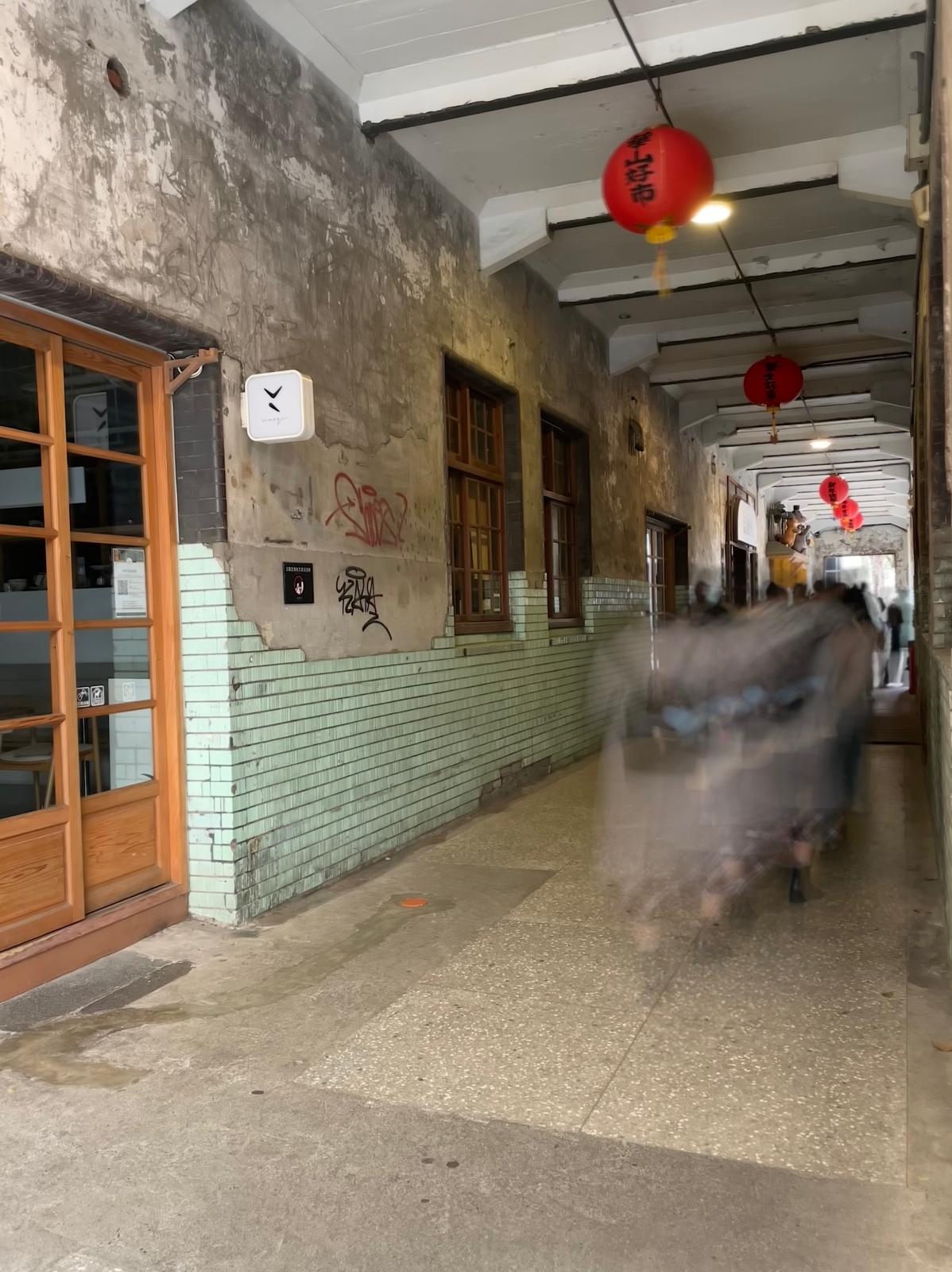
Each features a mix of independent arts and maker shoplets, galleries, dining and themed exhibitions set against a backdrop of preserved (mainly Japanese era) traditional urban form. These projects, advanced progressively through the 2010s are ‘designed to transform idle infrastructure into engines for both cultural production and (emerging) commerce’.
Wandering around the Huashan 1914 Creative Park, one observes remnants of a former Japanese Sake production factory, tastefully renovated (but not restored) and flanked by pedestrianised streets and lanes lined by narrow SME (local craft, food and creatives) outlets. The park’s entry includes a large public space supporting temporary (food) stall and a grassed mound (full of seated visitors) and live music. The precinct is over 7ha in area, and supports over 20,000m² of lettable floor space. Rent is State subsidised, however leasing periods are limited to encourage user diversity and regular turnover of tenancies to invite innovation and commercial progression.
There is much to debate about urban renewal and revitalisation of historic precincts in rapidly growing Asian cities. The Taiwanese approach is one that is clearly a standout. It is a proven attraction for the urban populus (the Songshan Cultural and Creative Park recorded some 10 million visitors in 2024) and has delivered commercial success – both to incumbent creative industries and as impetus for surrounding urban redevelopment.
There are (at least) 4 ingredients that coexist competently for this model to work. These are:
a) Judiciously renovated heritage buildings and spaces.
b) Generous public space and landscape that imbues greenery.
c) Carefully curated arrangements of creative industries and SME outlets.
d) National and local government led rental subsidies and support.
These fundamentals could readily be applied to other Asian or Australasian places that are crying out for renewal. This model could well be pertinent in the re-imagination key Australian urban precincts, consider this application across some of the 67 underutilised or historic Defence sites.
Author: Craig Czarny, Principal